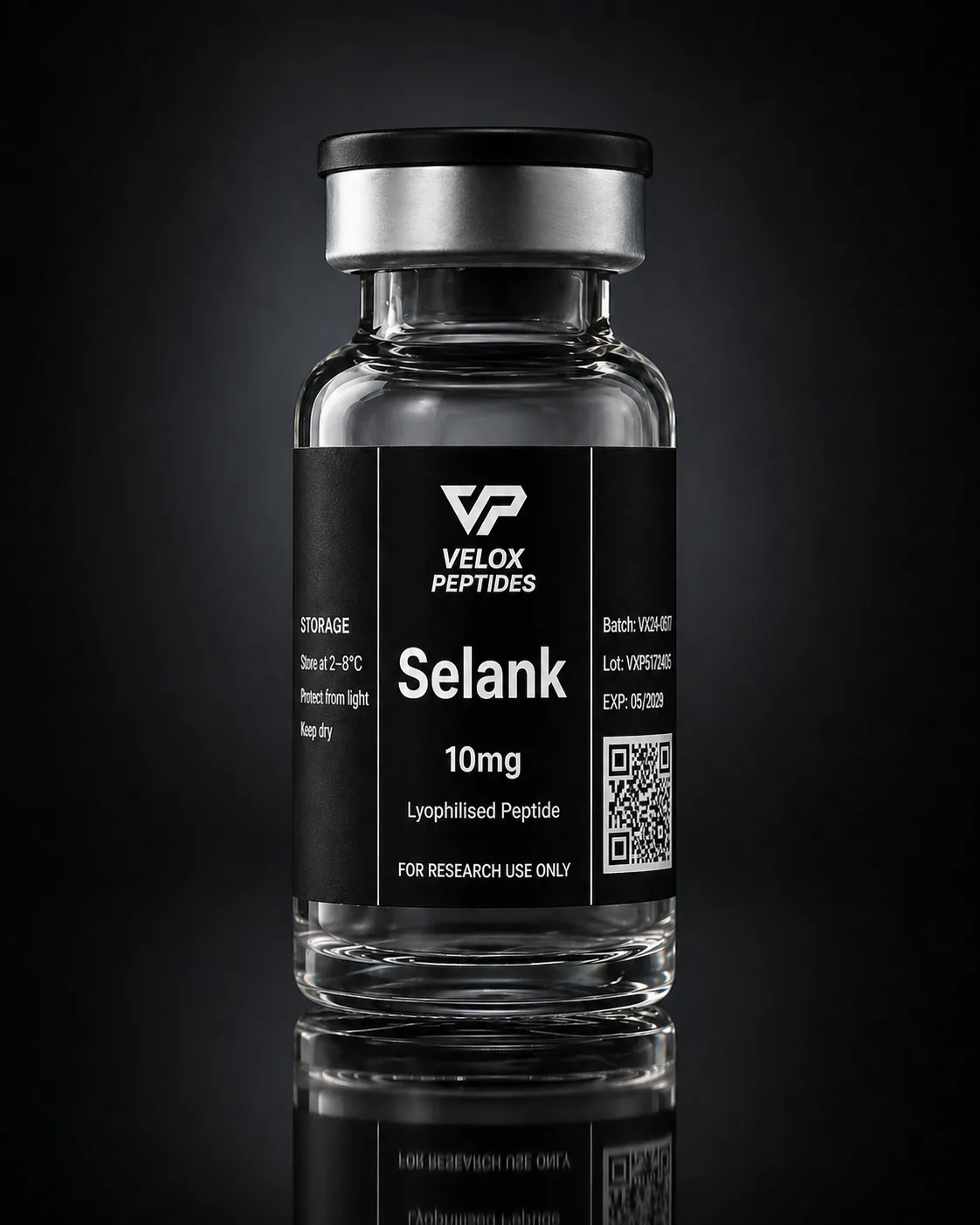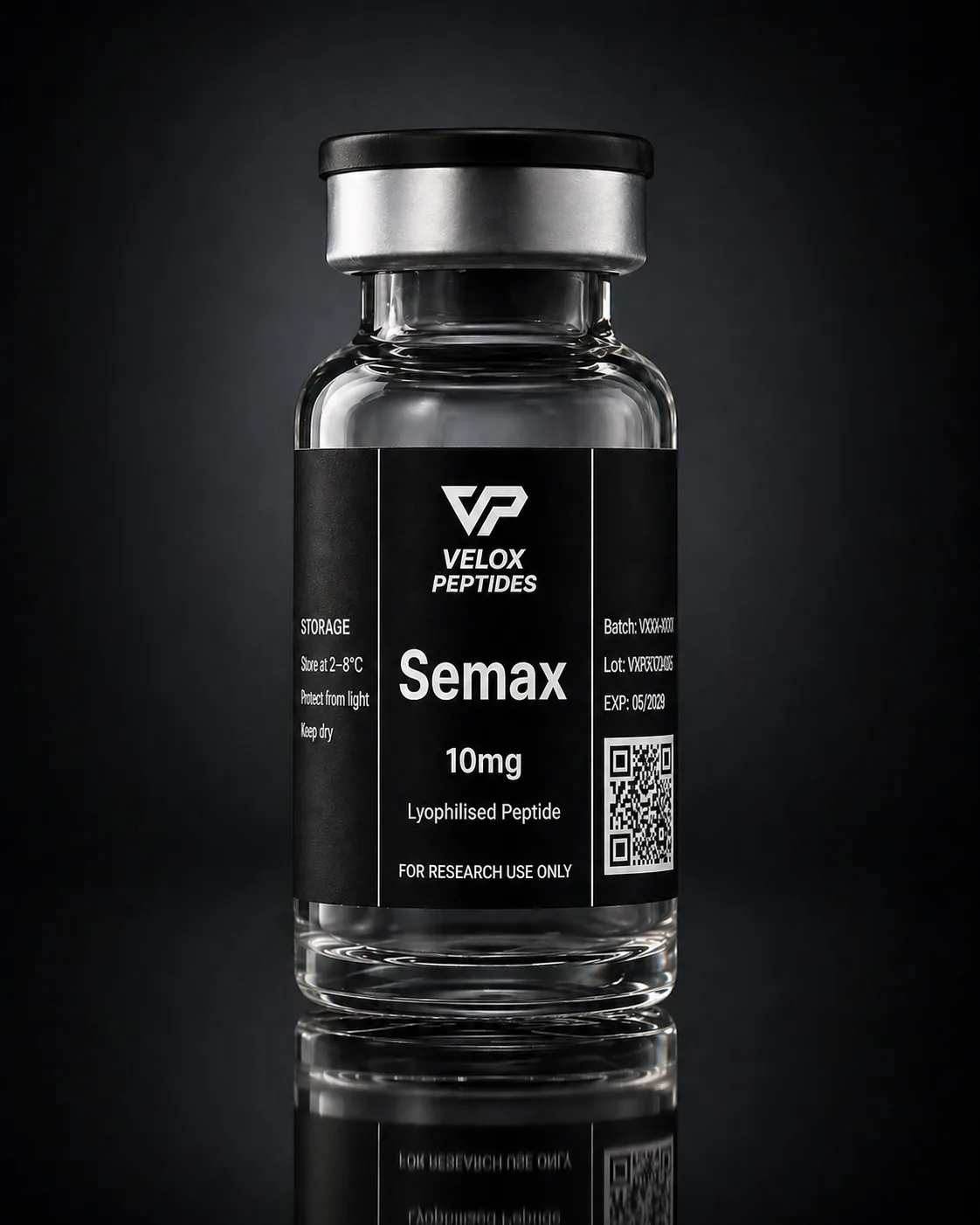
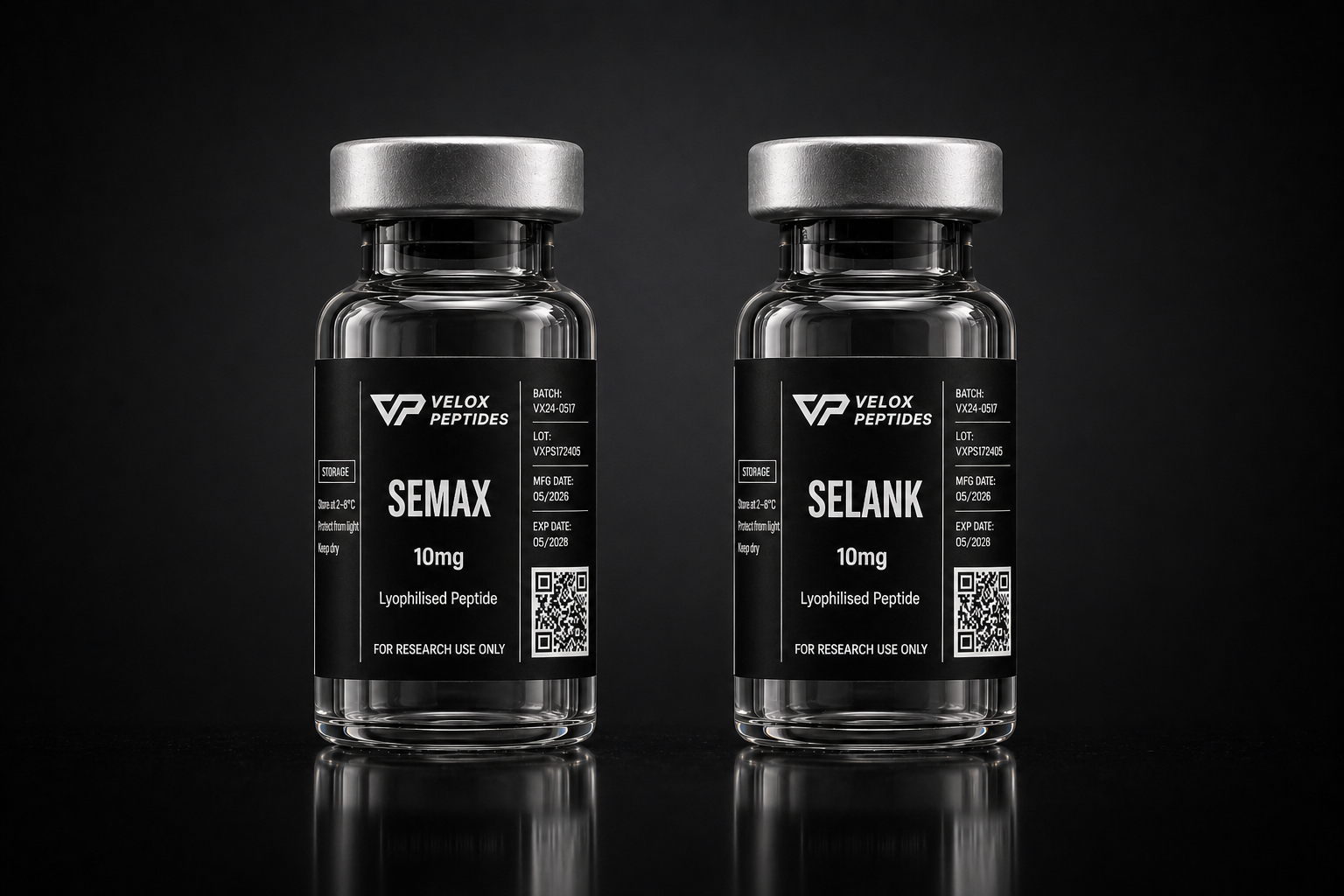
 STACK IMAGE
 - RESEARCH BUNDLE · 2 COMPOUNDS
Neuropeptide Dual Research Bundle
Semax + Selank
Semax10mg£34.99Selank10mg£39.99
£74.98
£55.98
SAVE 25%
View stack →
Semax is a synthetic peptide made up of 7 amino acids, based on a fragment of ACTH (Adrenocorticotropic Hormone - a naturally occurring stress hormone). A short chemical tail has been added to make it more stable and longer-lasting inside biological systems. Preclinical studies have investigated its effects on BDNF (Brain-Derived Neurotrophic Factor - a protein that supports brain cell growth and survival) levels in neuronal tissue.
Semax is a synthetic heptapeptide derived from the ACTH(4-7) fragment of adrenocorticotropic hormone (the tetrapeptide Met-Glu-His-Phe), extended at the C-terminus with a Pro-Gly-Pro tripeptide to form the sequence ACTH(4-7)PGP. The Pro-Gly-Pro extension increases resistance to enzymatic degradation, improving the compound’s stability in experimental conditions. Importantly, Semax does not retain the steroidogenic activity of full ACTH — it does not stimulate cortisol production — and research has instead focused on its neurotrophic and neuroprotective properties in animal and cell culture models.
Preclinical research on Semax has concentrated on neuroprotection and cognition models. Studies in rodent models of cerebral ischaemia and oxidative stress have examined whether Semax modifies markers of neuronal damage and survival. Cell culture research has examined its effects on BDNF (brain-derived neurotrophic factor) production — BDNF is a key regulatory protein involved in neuron growth, maintenance, and synaptic plasticity. Studies have reported that Semax upregulates BDNF mRNA expression in hippocampal cell models, making it relevant to neurogenesis and synaptic plasticity research.
Semax has also been studied in the context of monoaminergic systems in rodent models, with researchers examining its influence on serotonin and dopamine activity in brain regions associated with cognition and mood. Its structural similarity to neuropeptides derived from ACTH places it within a broader research programme examining the neuropeptide-cognition interface. Velox Peptides supplies Semax at 99% HPLC-verified purity as a lyophilised research reagent for in vitro use. Not for human or veterinary consumption.
Summary paraphrased from the peer-reviewed preclinical literature. For in vitro research use only. For source citations, email support@veloxpeps.com.
| Common name | Semax |
|---|---|
| Full name | ACTH(4-7) Pro-Gly-Pro Analogue |
| CAS number | 80714-61-0 |
| Molecular formula | C₃₇H₅₁N₉O₁₀S |
| Molecular weight | 813.9 g/mol |
| Sequence | MEHFPGP |
| HPLC purity | 99% (batch-verified) |
| Appearance | White to off-white lyophilised powder |
| Solubility | Bacteriostatic water, sterile saline |
| Storage (lyophilised) | 2–8°C, protected from light |
| Storage (reconstituted) | 2–8°C, up to 28 days |
| Supplied as | 10mg |
Every batch of Semax is third-party HPLC-tested prior to dispatch. Batch documentation is available on request.
Previous batch CoAs are archived in the CoA library. For batch-specific CoA requests prior to purchase, contact support@veloxpeps.com.
STACK IMAGE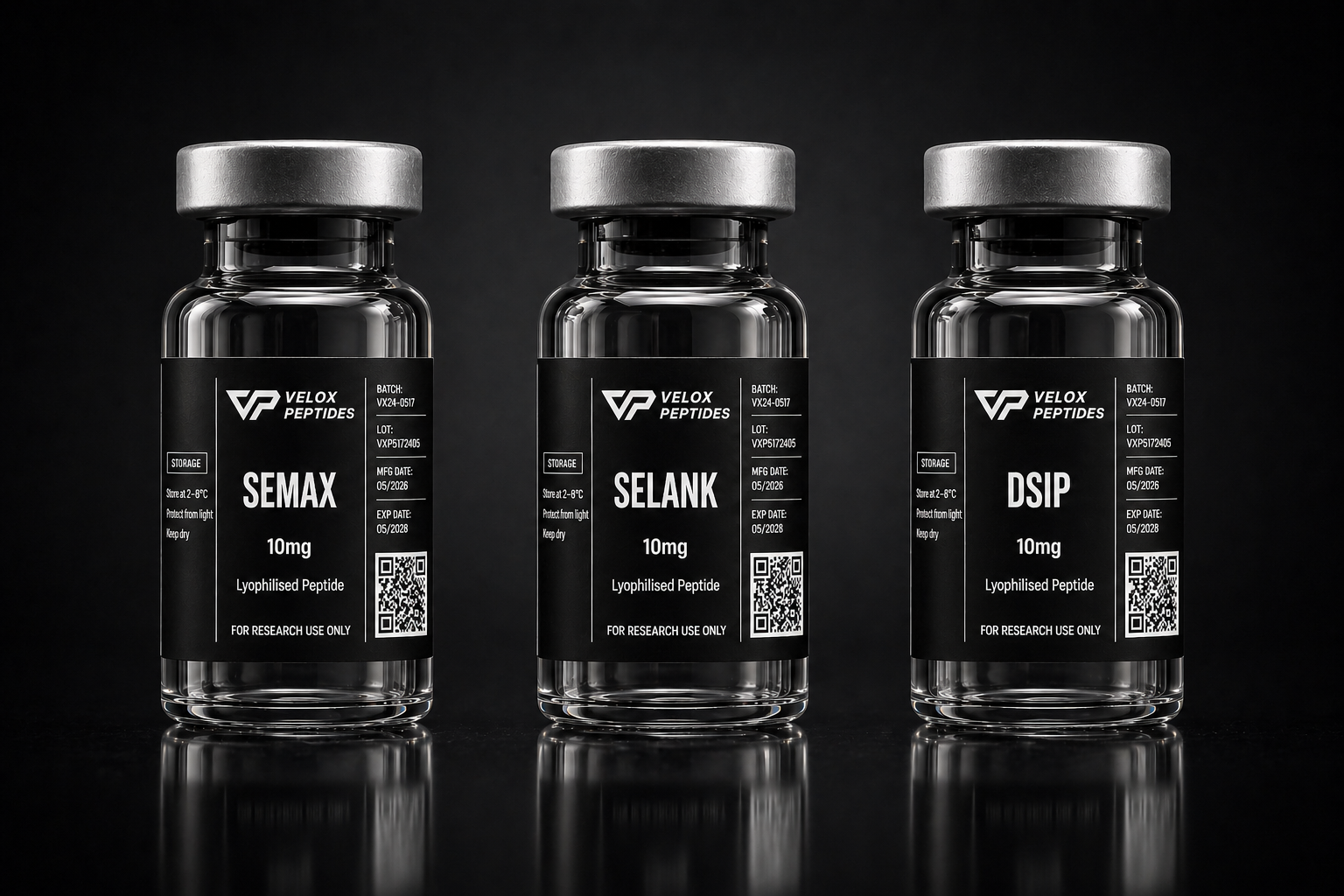 STACK IMAGE
For in vitro research use only. Semax is supplied solely as a research reagent for qualified professionals conducting in vitro or animal-model studies. It is not a medicinal product within the meaning of the Human Medicines Regulations 2012. It has not been evaluated by the MHRA or FDA. It is not intended for human or veterinary consumption, diagnosis, treatment, cure, or prevention of any condition. Any use outside lawful scientific research is outside the scope of sale.

This website is restricted to qualified researchers aged 21 or over. All products are for in vitro research use only.