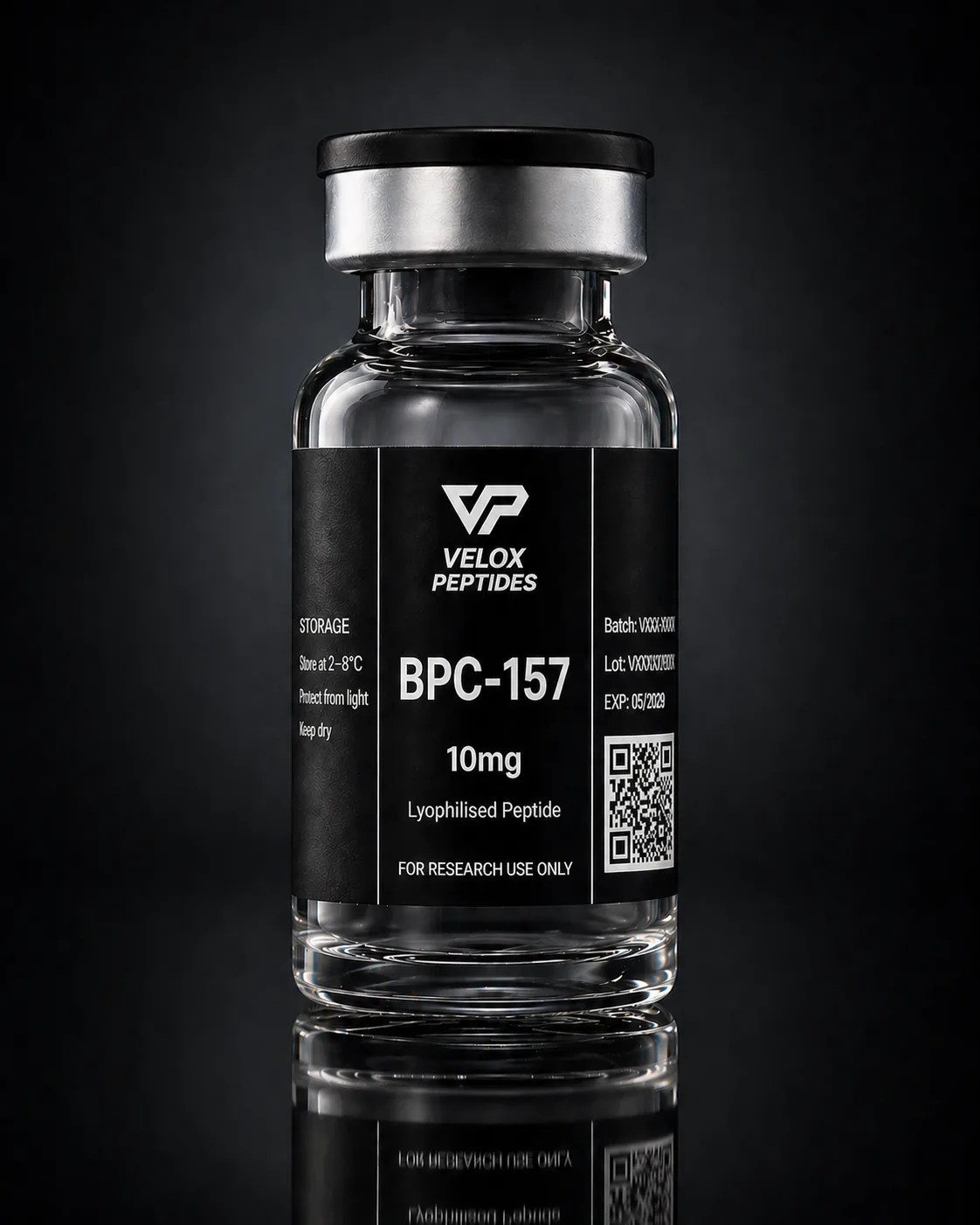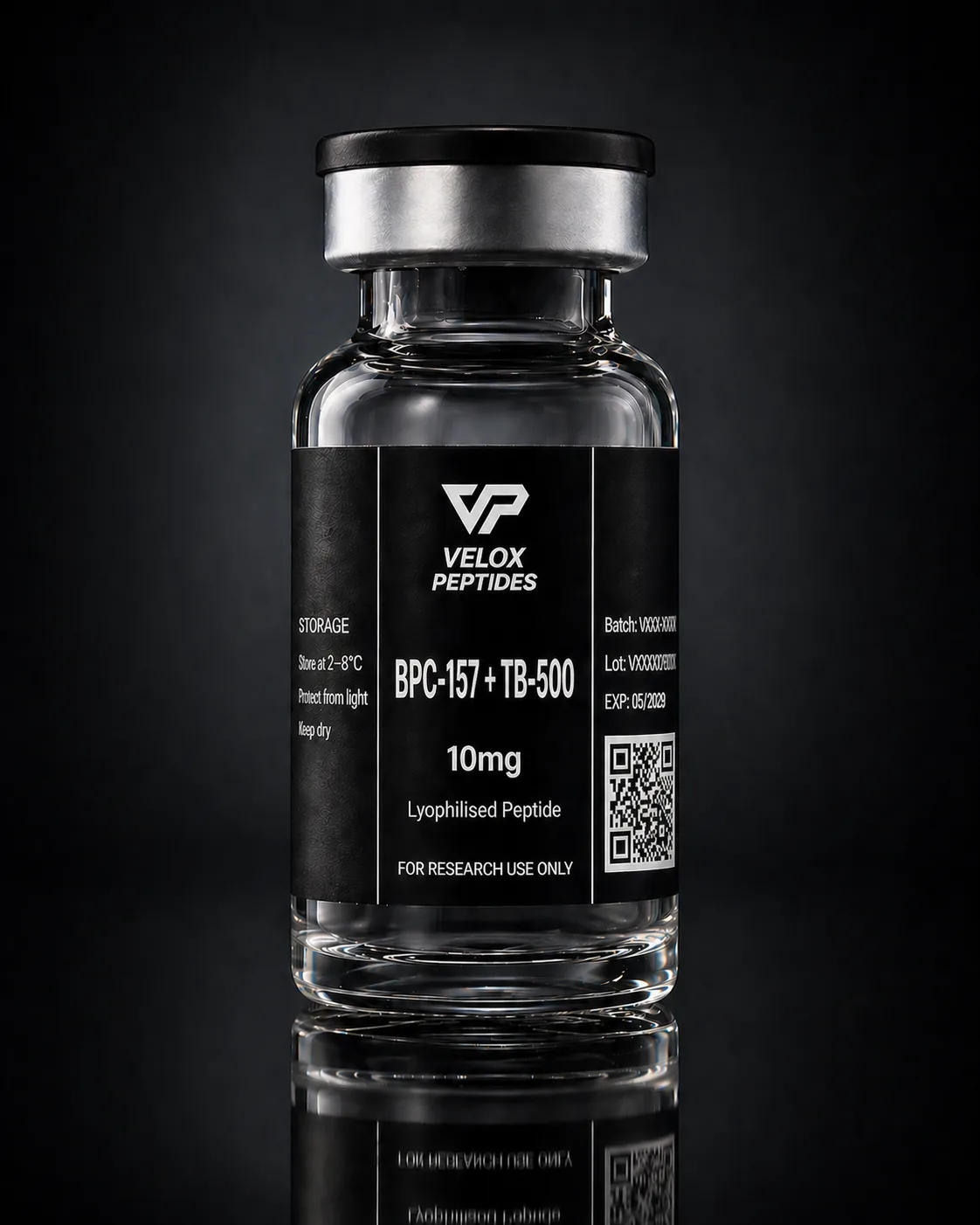
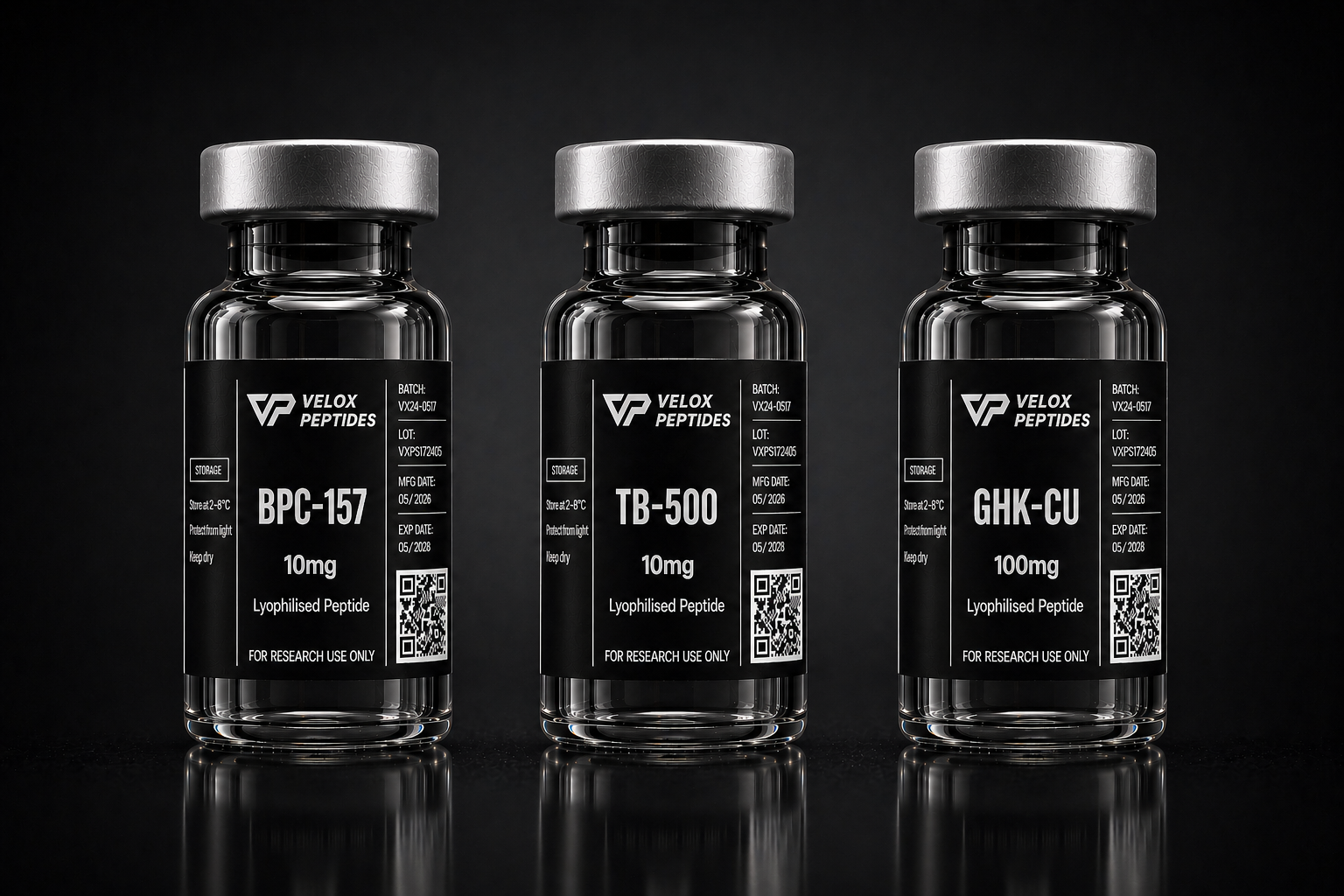
 STACK IMAGE
 - RESEARCH BUNDLE · 3 COMPOUNDS
Angiogenic Repair Research Bundle
BPC-157 + TB-500 + GHK-Cu
BPC-15710mg£39.99TB-50010mg£29.99GHK-Cu100mg£44.99
£109.97
£79.98
SAVE 27%
View stack →
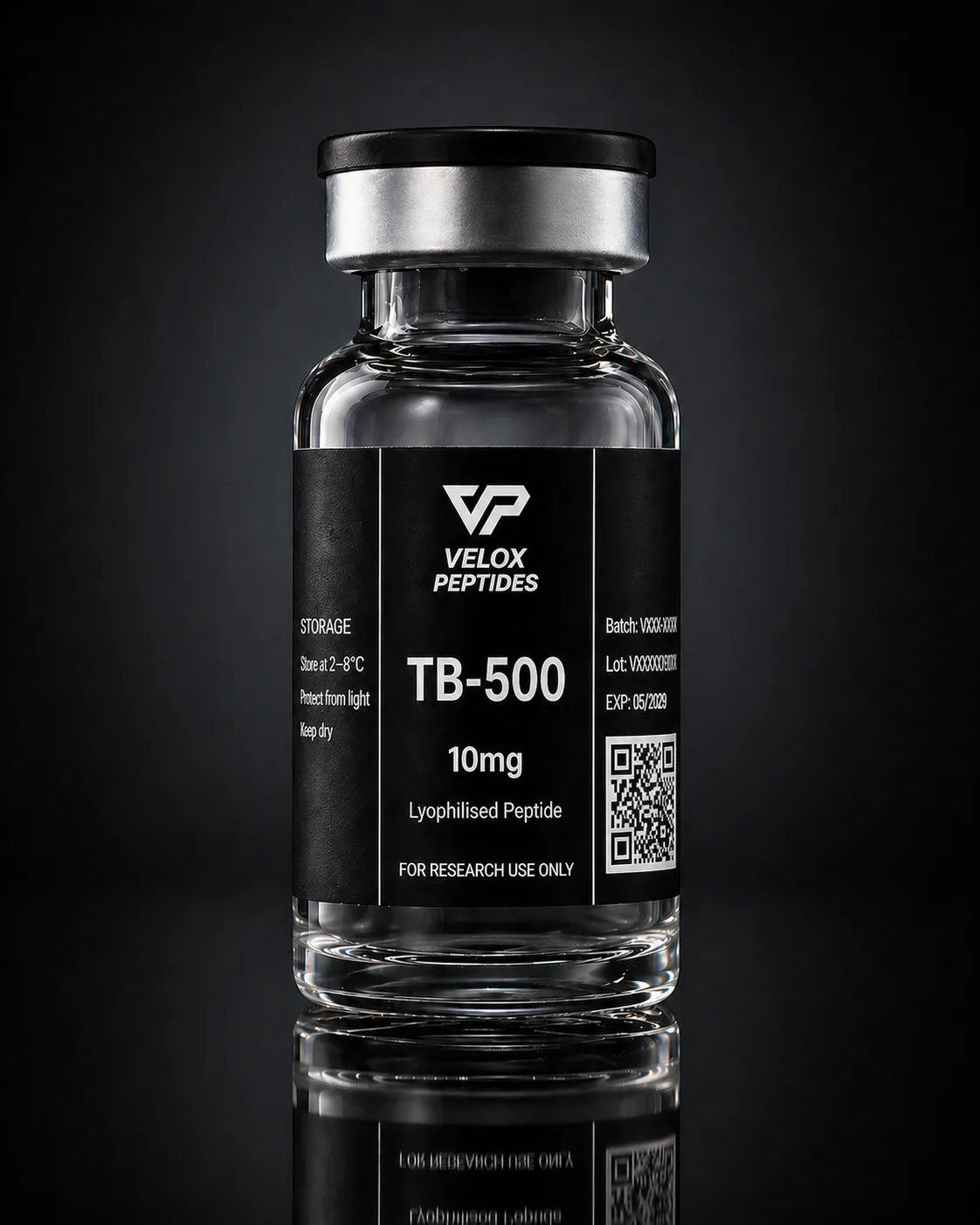
TB-500 is a synthetic version of Thymosin Beta-4, a protein found naturally in mammalian tissue. Preclinical studies have investigated how it interacts with actin - a structural protein that controls how cells move and organise themselves, particularly during tissue repair.
TB-500 is a synthetic peptide corresponding to the central active fragment of Thymosin Beta-4 (Tβ4), a 43-amino-acid protein that is one of the most abundant intracellular peptides found in mammalian cells. Thymosin Beta-4 is involved in regulating actin polymerisation — the process by which actin monomers assemble into filaments that form the structural scaffolding of cells and drive cell motility. TB-500 isolates the LKKTET actin-binding sequence from within the full Thymosin Beta-4 structure, providing a more tractable synthetic tool for studying these mechanisms in isolation.
Preclinical studies on TB-500 and the broader Thymosin Beta-4 family have primarily examined tissue closure mechanics, angiogenesis, and cellular repair. In rodent models, researchers have investigated how Tβ4-derived peptides affect the migration of cell types — including endothelial cells, keratinocytes, and fibroblasts — into repair sites, where directed cell movement is critical for tissue closure. Angiogenesis studies have examined the role of this peptide family in promoting new blood vessel formation into ischaemic or damaged tissue. Research has also looked at its effects on inflammatory markers in experimentally induced injury models.
TB-500 is frequently studied alongside BPC-157 in multi-compound preclinical protocols, as the two peptides are understood to act on complementary repair-associated pathways — BPC-157 primarily through VEGF and growth hormone receptor signalling, and TB-500 through actin-mediated cell motility. This complementarity has made the BPC-157 + TB-500 pairing a common combination in tissue repair research. Velox Peptides supplies TB-500 at ≥99% HPLC-verified purity as a lyophilised research reagent for in vitro use. Not for human or veterinary consumption.
Summary paraphrased from the peer-reviewed preclinical literature. For in vitro research use only. For source citations, email support@veloxpeps.com.
| Common name | TB-500 |
|---|---|
| Full name | Thymosin Beta-4 |
| CAS number | 77591-33-4 |
| Molecular formula | C₂₁₂H₃₅₀N₅₆O₇₈S |
| Molecular weight | 4963.4 g/mol |
| Sequence | Ac-SDKPDMAEIEKFDKSKLKKTETQEKNPLPSKETIEQEKQAGES-OH (frag) |
| HPLC purity | ≥99% (batch-verified) |
| Appearance | White to off-white lyophilised powder |
| Solubility | Bacteriostatic water, sterile saline |
| Storage (lyophilised) | 2–8°C, protected from light |
| Storage (reconstituted) | 2–8°C, up to 28 days |
| Supplied as | 10mg |
Every batch of TB-500 is third-party HPLC-tested prior to dispatch. Batch documentation is available on request.
Previous batch CoAs are archived in the CoA library. For batch-specific CoA requests prior to purchase, contact support@veloxpeps.com.
STACK IMAGE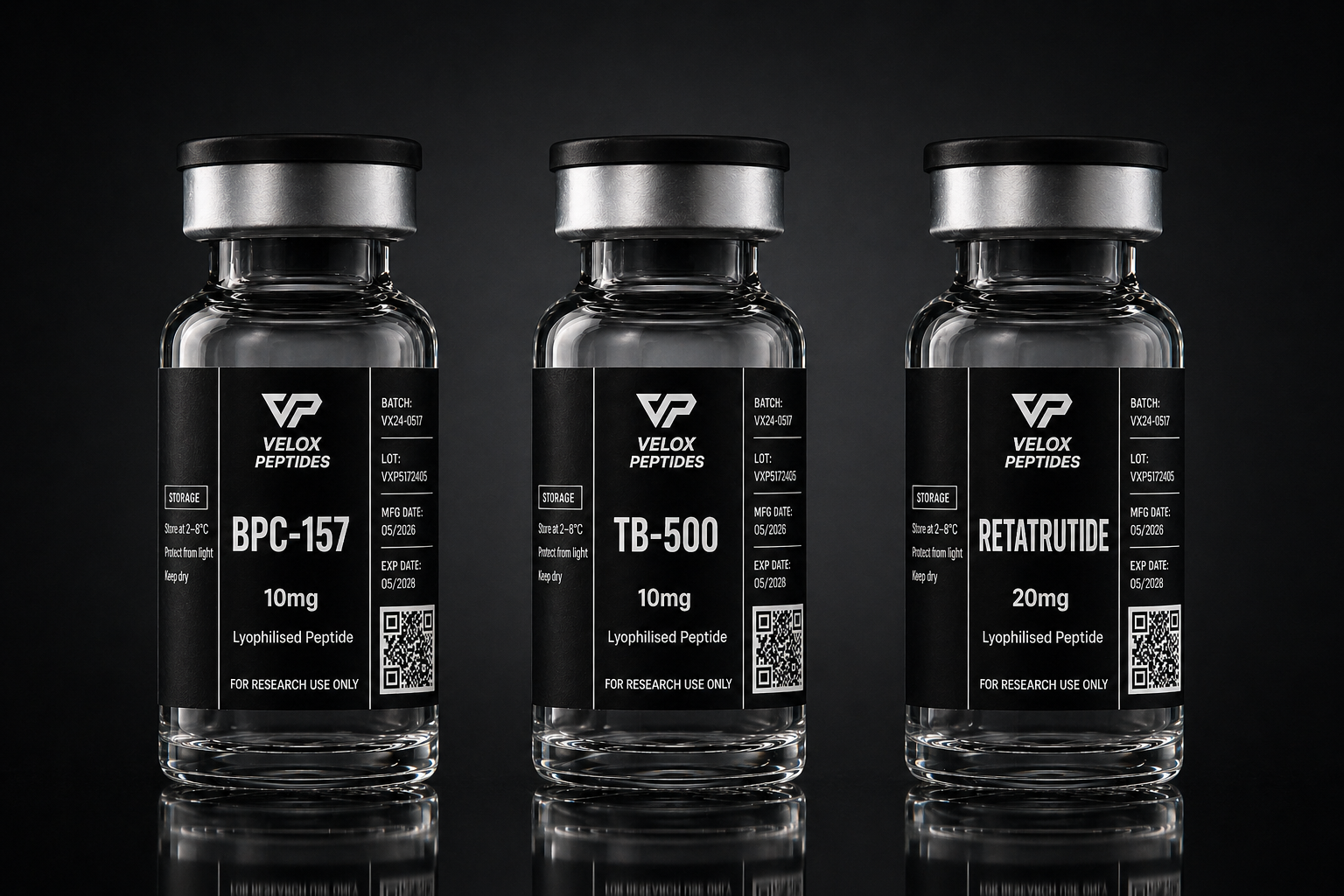 STACK IMAGE
For in vitro research use only. TB-500 is supplied solely as a research reagent for qualified professionals conducting in vitro or animal-model studies. It is not a medicinal product within the meaning of the Human Medicines Regulations 2012. It has not been evaluated by the MHRA or FDA. It is not intended for human or veterinary consumption, diagnosis, treatment, cure, or prevention of any condition. Any use outside lawful scientific research is outside the scope of sale.

This website is restricted to qualified researchers aged 21 or over. All products are for in vitro research use only.