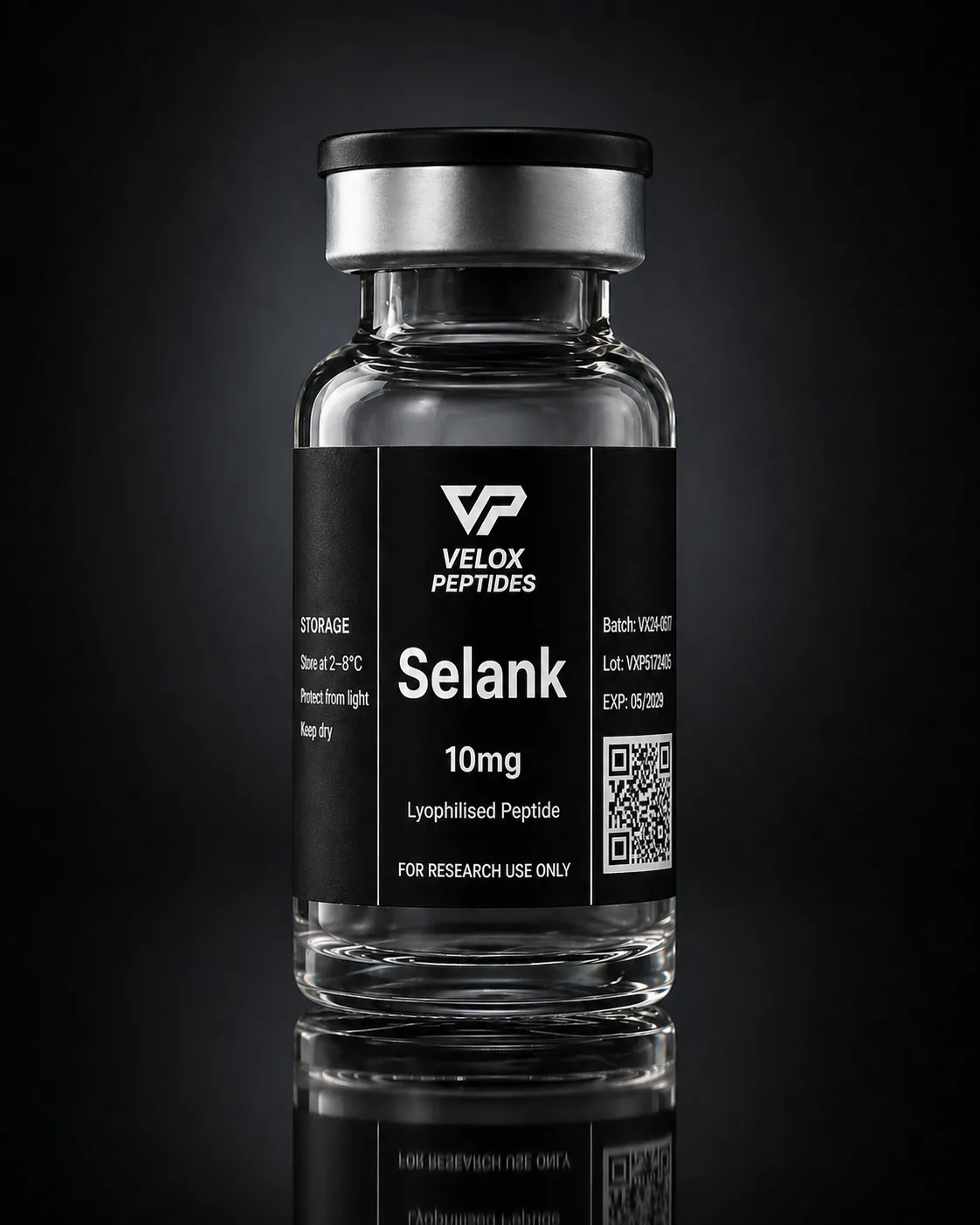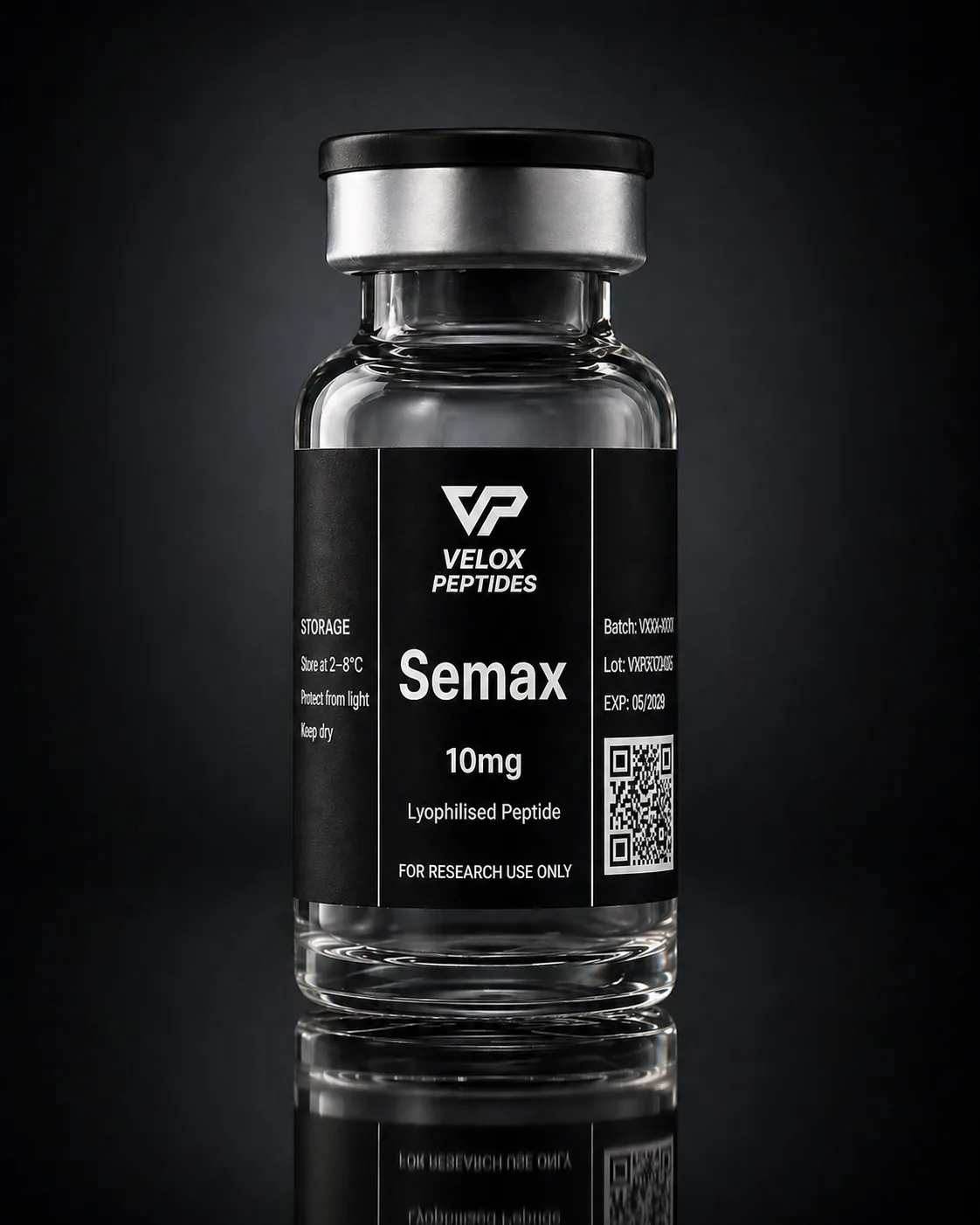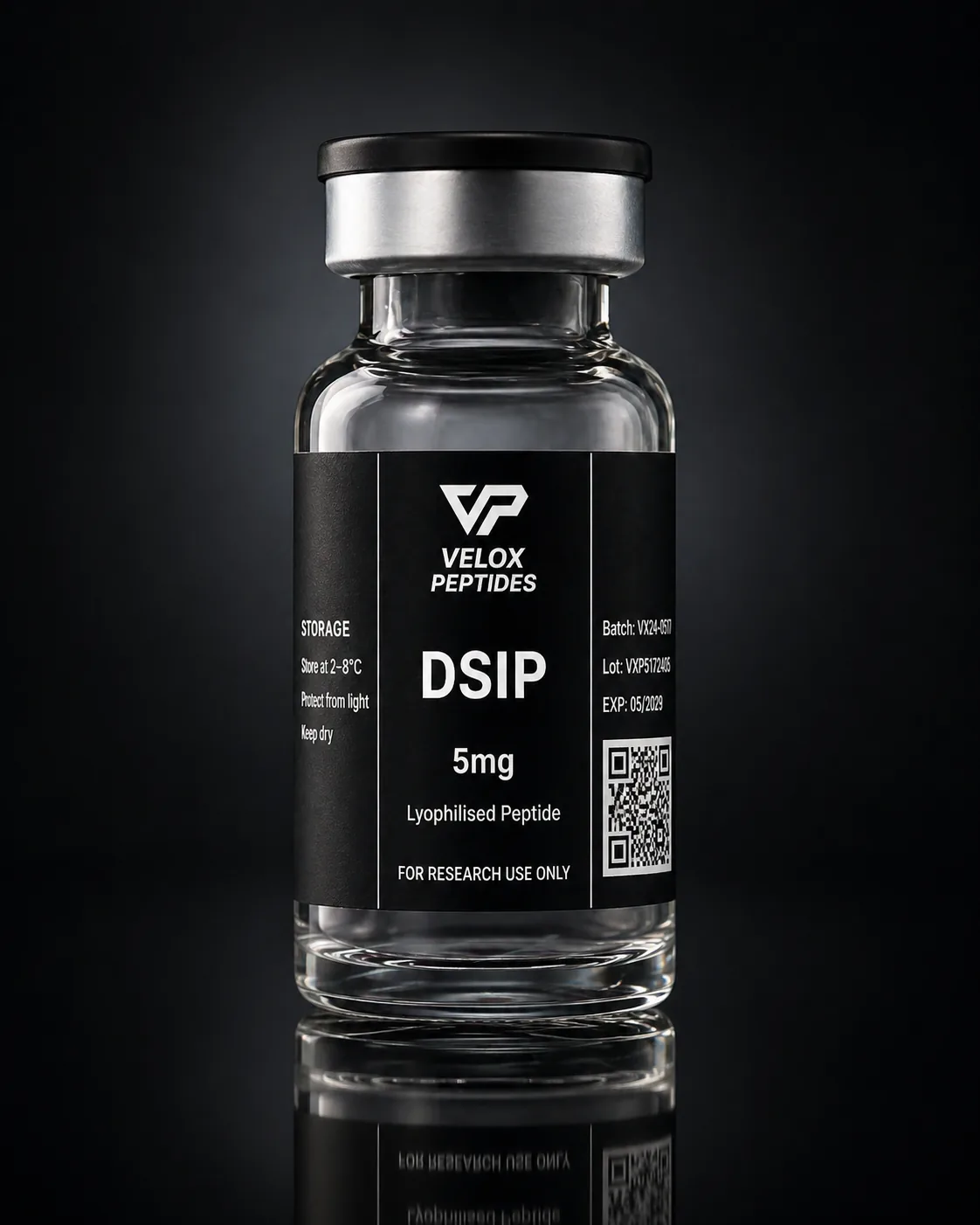
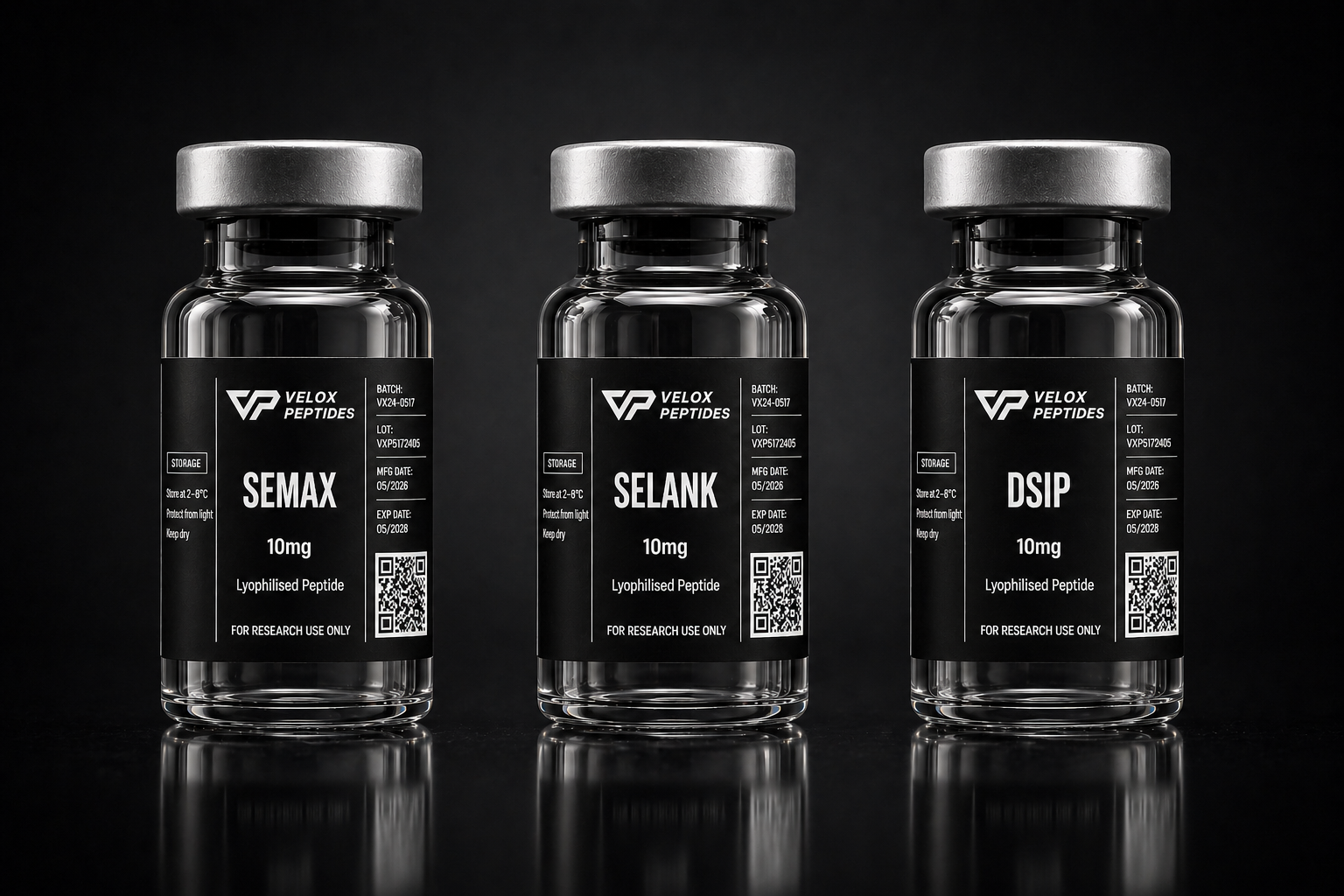
 STACK IMAGE
 - RESEARCH BUNDLE · 3 COMPOUNDS
Neuropeptide & Sleep Research Bundle
Semax + Selank + DSIP
Semax10mg£34.99Selank10mg£39.99DSIP10mg£44.99
£119.97
£79.98
SAVE 33%
View stack →
DSIP is a short neuropeptide (a type of small protein used for signalling between brain cells) made up of just 9 amino acids. It was first isolated from rabbit blood during deep sleep. Animal studies have investigated how it interacts with the structure of sleep - particularly the deep, slow-wave stages - and how it affects the body's stress-response systems.
DSIP (Delta Sleep-Inducing Peptide) is a nonapeptide with the sequence Trp-Ala-Gly-Gly-Asp-Ala-Ser-Gly-Glu. It was first isolated from the cerebral venous blood of rabbits in 1977 by Schoenenberger and Monnier, following electrical stimulation of the thalamus during sleep induction experiments — giving rise to its name. Unlike most synthetic peptide research compounds, DSIP is an endogenous neuropeptide identified in the hypothalamus, limbic system, pituitary, and peripheral tissues of mammals, though it is supplied here as a synthesised research reagent for controlled experimental conditions.
The primary area of research interest for DSIP has been sleep regulation and neuroendocrine modulation. Early rodent studies reported that peripheral and central administration of DSIP modified slow-wave and delta sleep patterns, though subsequent research has produced variable results and the precise mechanism by which DSIP interacts with sleep architecture remains an active area of investigation. Separately, research has examined DSIP’s role in stress axis modulation — specifically its effects on corticotropin-releasing hormone (CRH) and ACTH secretion — suggesting a potential interface between the sleep regulatory system and the hypothalamic-pituitary-adrenal (HPA) axis.
DSIP has also been studied for antioxidant properties and neuroprotective potential in cell culture models, and for its interaction with opioid peptide systems and basal ganglia function. Its relatively small, stable nonapeptide structure makes it a practical tool for studying receptor binding kinetics and neuroendocrine signalling in vitro. Velox Peptides supplies DSIP at ≥99% HPLC-verified purity as a lyophilised research reagent for in vitro use by qualified researchers. Not for human or veterinary consumption.
Summary paraphrased from the peer-reviewed preclinical literature. For in vitro research use only. For source citations, email support@veloxpeps.com.
| Common name | DSIP |
|---|---|
| Full name | Delta Sleep-Inducing Peptide |
| CAS number | 62568-57-4 |
| Molecular formula | C₃₅H₄₈N₁₀O₁₅ |
| Molecular weight | 848.9 g/mol |
| Sequence | WAGGDASGE |
| HPLC purity | ≥99% (batch-verified) |
| Appearance | White to off-white lyophilised powder |
| Solubility | Bacteriostatic water, sterile saline |
| Storage (lyophilised) | 2–8°C, protected from light |
| Storage (reconstituted) | 2–8°C, up to 28 days |
| Supplied as | 5mg, 10mg |
Every batch of DSIP is third-party HPLC-tested prior to dispatch. Batch documentation is available on request.
Previous batch CoAs are archived in the CoA library. For batch-specific CoA requests prior to purchase, contact support@veloxpeps.com.
For in vitro research use only. DSIP is supplied solely as a research reagent for qualified professionals conducting in vitro or animal-model studies. It is not a medicinal product within the meaning of the Human Medicines Regulations 2012. It has not been evaluated by the MHRA or FDA. It is not intended for human or veterinary consumption, diagnosis, treatment, cure, or prevention of any condition. Any use outside lawful scientific research is outside the scope of sale.

This website is restricted to qualified researchers aged 21 or over. All products are for in vitro research use only.